
TL;DR (Overview)
Veda Smriti is a personalized learning platform designed to make Vedic knowledge accessible and engaging for modern users. By combining guided learning, structured content, and AI-driven recommendations, the platform reduces entry barriers and improves learning continuity.
- ROLE
- Product Designer
- TIMELINE
- 2024
- TEAM
- Naman Bhateja
- Skills
- UI UX DesignBrandVisual Design
Problem
Exploring Vedic knowledge today is overwhelming, especially for beginners. Content is scattered, highly complex, and often lacks structure, making it difficult to know where to begin. At the same time, more experienced users struggle to find meaningful, organized content that fits into their daily routines.
This creates a broken experience across the spectrum:
- Beginners feel lost and drop off early
- Intermediate users lack continuity
- Advanced users don’t find structured depth
👉 The issue wasn’t lack of content, it was lack of structure and guidance
Context
The product sits between wellness, education, and spirituality. While apps like Headspace and Calm simplify meditation, there are very few platforms focused on Vedic learning with modern UX and personalization.
This creates a clear opportunity:
- Transform static knowledge into guided learning
- Make spiritual exploration more approachable
- Bridge tradition with modern digital behavior
Research & Insights
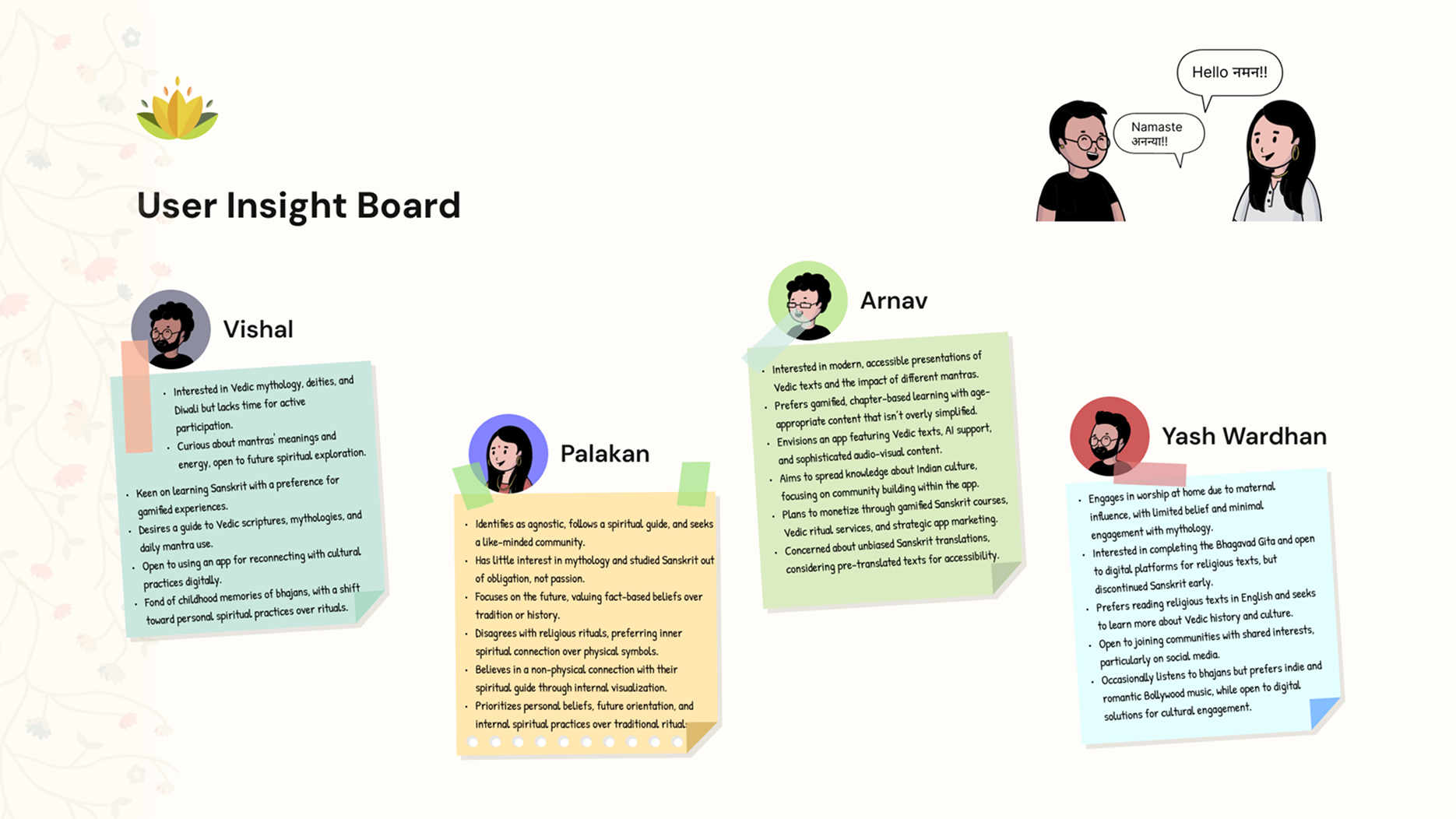
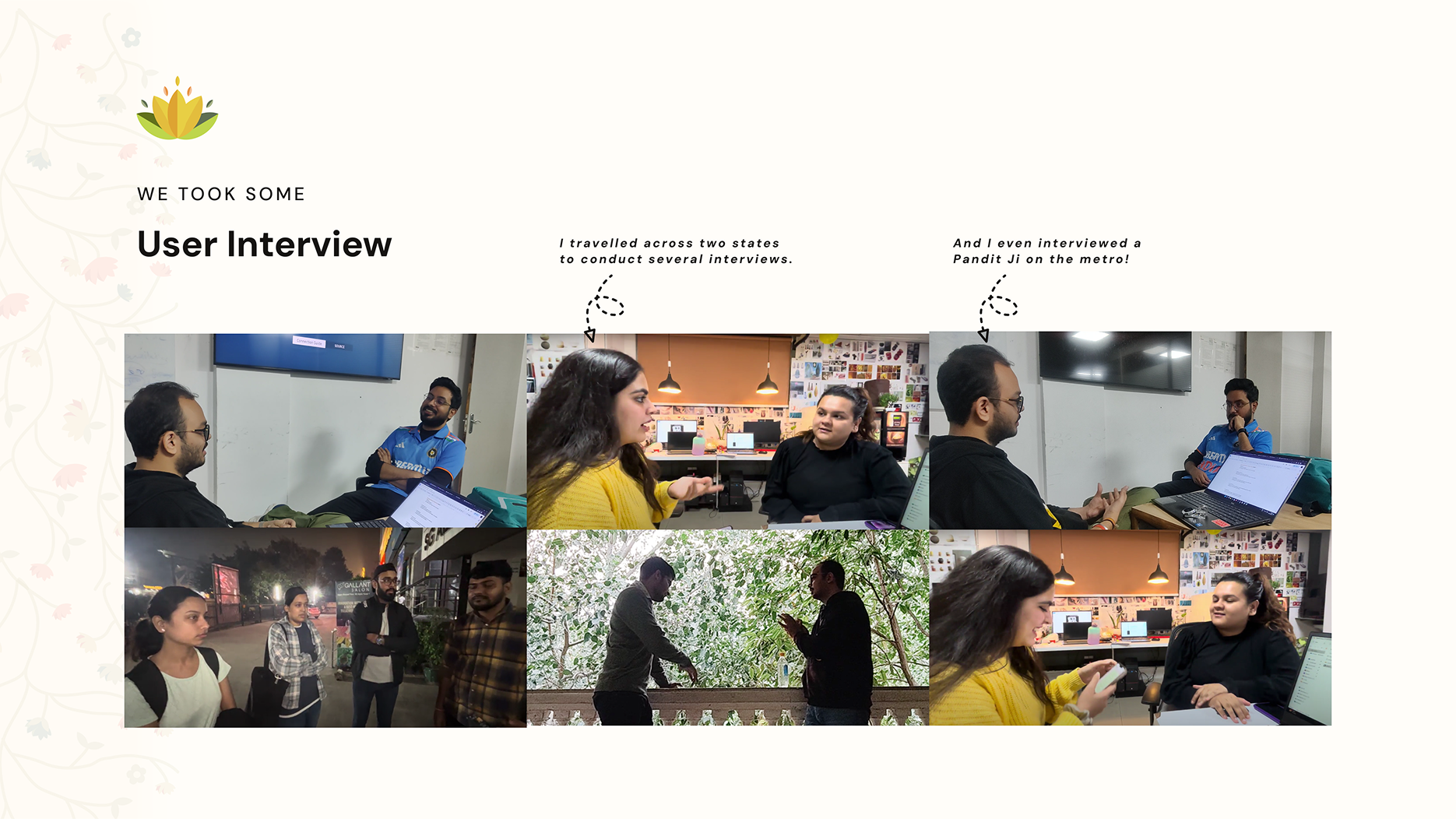
To understand user needs, I conducted interviews with 20 users and supported findings with survey data from 50+ participants.
A strong interest in Vedic knowledge was evident, but accessibility remained the biggest barrier.
- 65% felt intimidated by the complexity
- 75% wanted personalized experiences
- 60% preferred interactive formats like AI or guided sessions
Key Findings
A majority of users showed interest in Vedic knowledge, but were held back by accessibility issues.
- 65% were interested but felt intimidated by complexity
- 75% wanted a personalized learning experience
- 60% preferred interactive formats like guided meditation or AI recommendations
Beyond numbers, behavioral patterns emerged
Users didn’t just want content — they wanted:
- Guidance on where to start
- Simplified explanations
- A structured path
User Segments
From interviews, three distinct mindsets emerged:
- Curious beginners → Need guidance & simplicity
- Modern spiritual users → Prefer flexible, non-ritualistic learning
- Deep learners → Want structured and detailed content
Solution
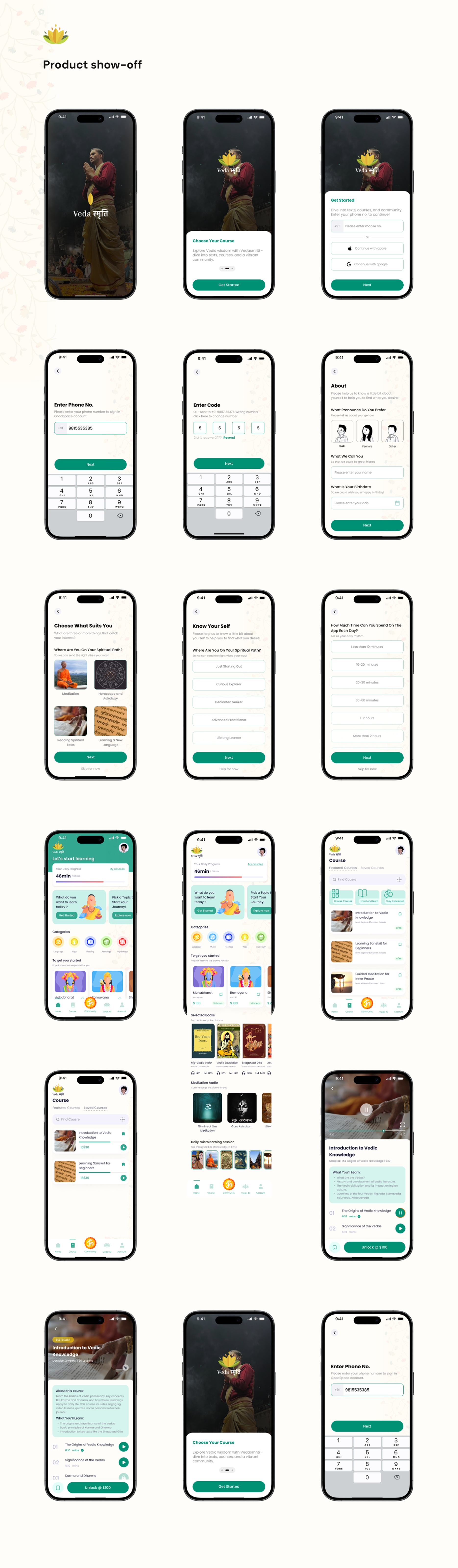
The app is built around three loops, each operating on a different cadence.
1. Daily — 10-minute practice
A single mantra paired with a short audio guide, transliteration, and meaning. No streaks, no badges — just a quiet check-in.
2. Weekly — story
A short narrative drawn from the Puranas or Upanishads, written in plain language, with links into the original text for those who want to go deeper.
3. Monthly — arc
A four-week thematic arc (e.g., the Pancha Bhutas, the Gayatri family of mantras) that weaves daily mantras and weekly stories into one frame.
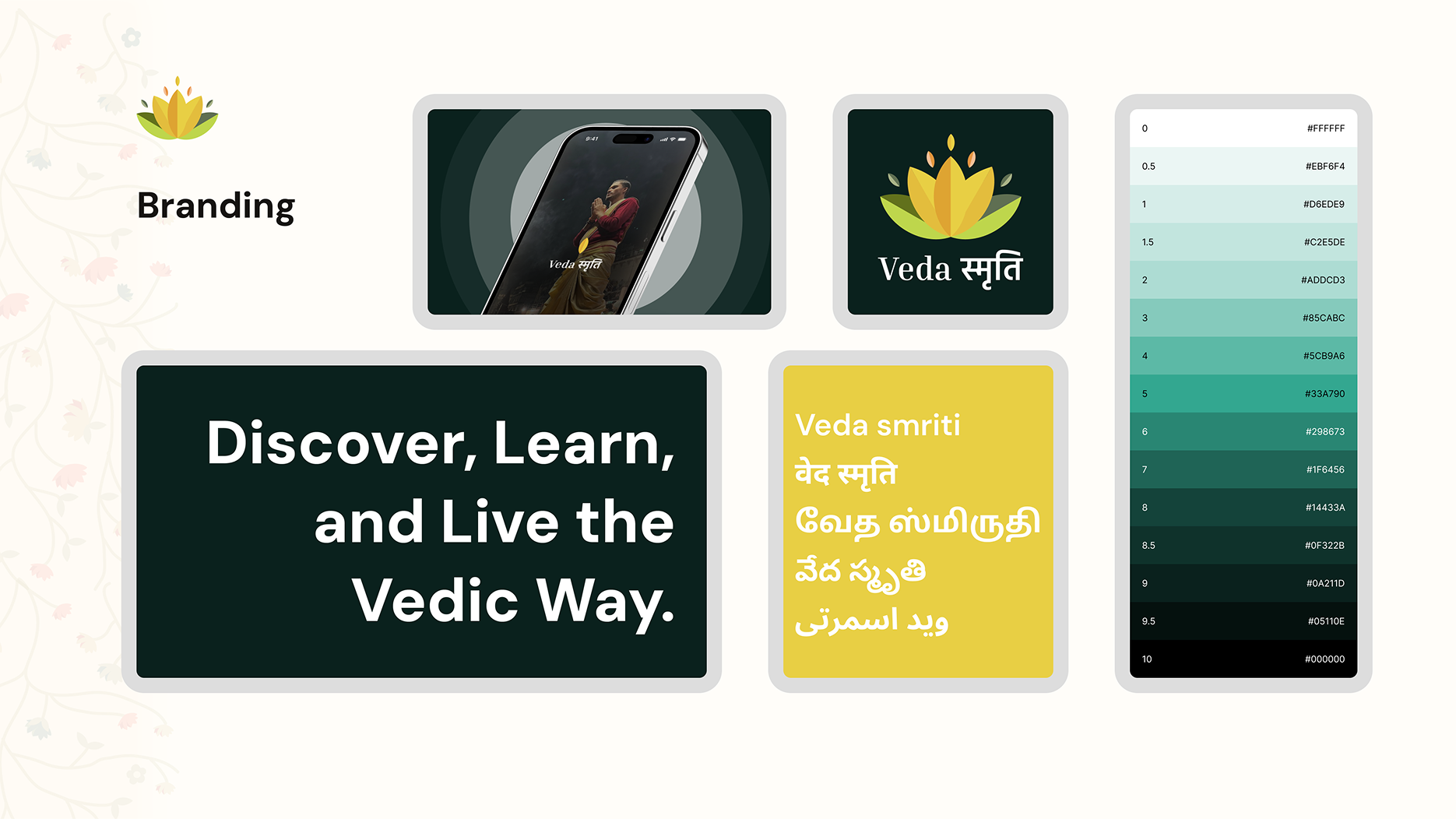
Calm, off-white visual language. Devanagari prominent. Sanskrit transliteration alongside meaning so the user is never guessing.
Impact
Veda Smriti is a personal project — there’s no analytics dashboard. But the people I onboarded as the first cohort reported back two things consistently:
- Daily completion rate near 80% across a 3-week trial — the 10-minute floor was the unlock
- Pronunciation confidence grew enough that several users started reciting in family settings
The qualitative feedback was the most encouraging: practitioners said the app made the tradition feel less heavy — accessible without feeling diluted.
Reflection
The lesson I’m taking forward is that respect for source material is itself a design choice. Stock photography, bright illustrations, and gamified streaks would have worked for retention metrics — but they would have flattened the thing the user actually cares about.
If I take Veda Smriti further, the next push is community: shared mantras, weekly circles, and the option for a teacher to onboard students through the same loops without turning the app into a course platform.